

A story we received via email and a letter of thanks we want to share with you.
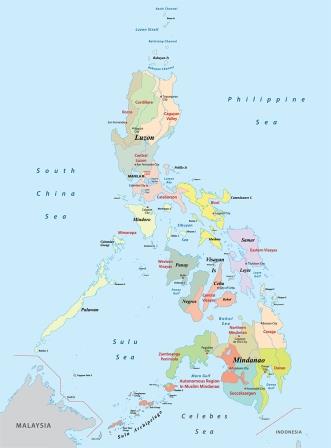 Aljobert, one of the tenants in a farmland in Ormoc, Philippines lived in a small makeshift nipa hut with his wife. Like most of the homes in their barangay (village), their home was made up of very light materials. They lived with his wife’s parents, both above sixty years old, and one niece who just turned one. When the winds picked up at seven in the morning on Nov. 8, 2013, their house was the first to go. Roof, walls, posts…all gone. They couldn’t take shelter from their neighbors, because every house in their area had been flattened. So they made a decision to seek shelter at a concrete house a couple hundred meters from theirs. Because visibility was poor at the height of the storm, they couldn’t be sure if the house they sought for shelter to was still standing. Worse, the direction of the house they were attempting to reach was the exact opposite of the direction of the howling winds.
With two elderlies and his wife, Aljobert had no choice but to place the one-year old child inside his shirt. That way, he could shield the child from the cold rain and at the same time use his free hand to carry one of his wife’s parents who wasn’t well during that time.
A walk which normally took less than five minutes took about thirty, and the dangers of metal sheets, steel railings, falling trees and other debris were life-threatening obstacles to hurdle with each step they took.
Fortunately, they were able to reach the home of their landlord, and even though the structure didn’t have a roof anymore, they were already far from danger.
This is the kind of testimonies we constantly hear when we distribute relief goods to people. That is why it is not surprising to see their happy reactions every time they receive help from various foundations and private donors. They appreciate the help so much that you can sometimes see tears streaming from their faces upon receiving the goods. When we ask them why the sentimental reaction, a single question will normally illicit a long story as to how much they suffered during the storm and how even after the calamity, the hard days don’t seem to stop. The after-effects of the damage brought by the storm are still strongly felt by all victims. Most of these recipients are tenants of a farmland, and their day-to-day sustenance rely on their work as farmhands. Nowadays, with almost a 100% of the farmlands destroyed by the typhoon, land-owners cannot offer them work. Thus, they rely mostly on the relief goods coming in to survive.
Aljobert’s tale is not a rare story. Most of the survivors have the same harrowing tales and life-altering experiences. Most people, if not all, just consider themselves fortunate that they simply survived the storm.
On behalf of all the recipients, we thank you, Food For Kidz, as well as all the people involved in sending the rice packs. They may not know who all of you are, but they are very thankful for the help you’ve all sent. Thank you for thinking about their survival. Thank you for your aid. Thank you for your efforts. Most of all, thank you for your concern. I hope you will continue your humanitarian work and that all of you will be continually blessed.
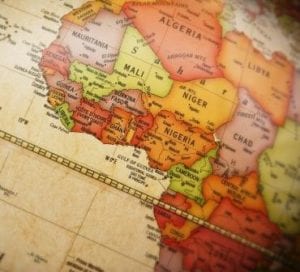 The Ebola outbreak is in the news a lot lately. Efforts are underway to help those who have been affected or are trying desperately to keep the virus at bay. While there is a number of things health care and government officials are trying to put in place, one thing is certain. Nutrition plays a key role in helping those battling Ebola, and we need to work together to get healthy food to those in need.
 Afghan survivors wait for food donations Tuesday, May 6, near where a double landslide struck in the northeastern province of Badakhshan. More than 2,000 people were killed when a mass of rock and mud came crashing down Friday, May 2, in the village of Abi Barak.
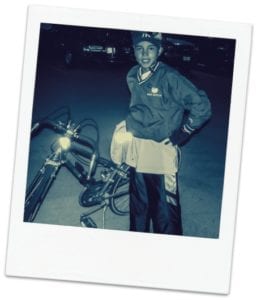 A bicycle is a pastime for most Americans, but in many parts of the world a bicycle is a critical mode of transportation that serves many purposes. From transporting goods to the market, giving rides, and getting to work or school, to navigating limited road infrastructures bicycles often become a valuable source of mobility.
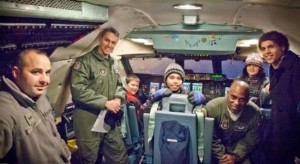
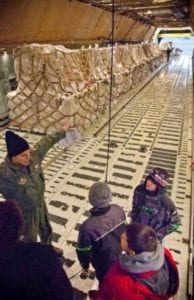 Food for Kidz heard what Isaiah wanted to do and pledged to help him get the bicycles he collected delivered to Haiti, Afghanistan and other places around the world. Isaiah collected an amazing 1,000 bicycles in his efforts! Food for Kidz worked with Isaiah, his parents and Public Affairs to coordinate not only the shipment, but the witnessing of the airlift by Isaiah and his friends. They were allowed on the airfield and treated to a tour of the C-5 airplane by the Air Force pilots.
 those who have received them.
 In response, in part, to the article,
 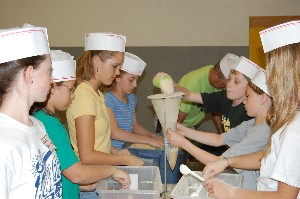 One scoop at a time, each meal needs to be packaged with precision and care. It’s volunteers, willing to scoop, measure, and weigh who have helped package and feed